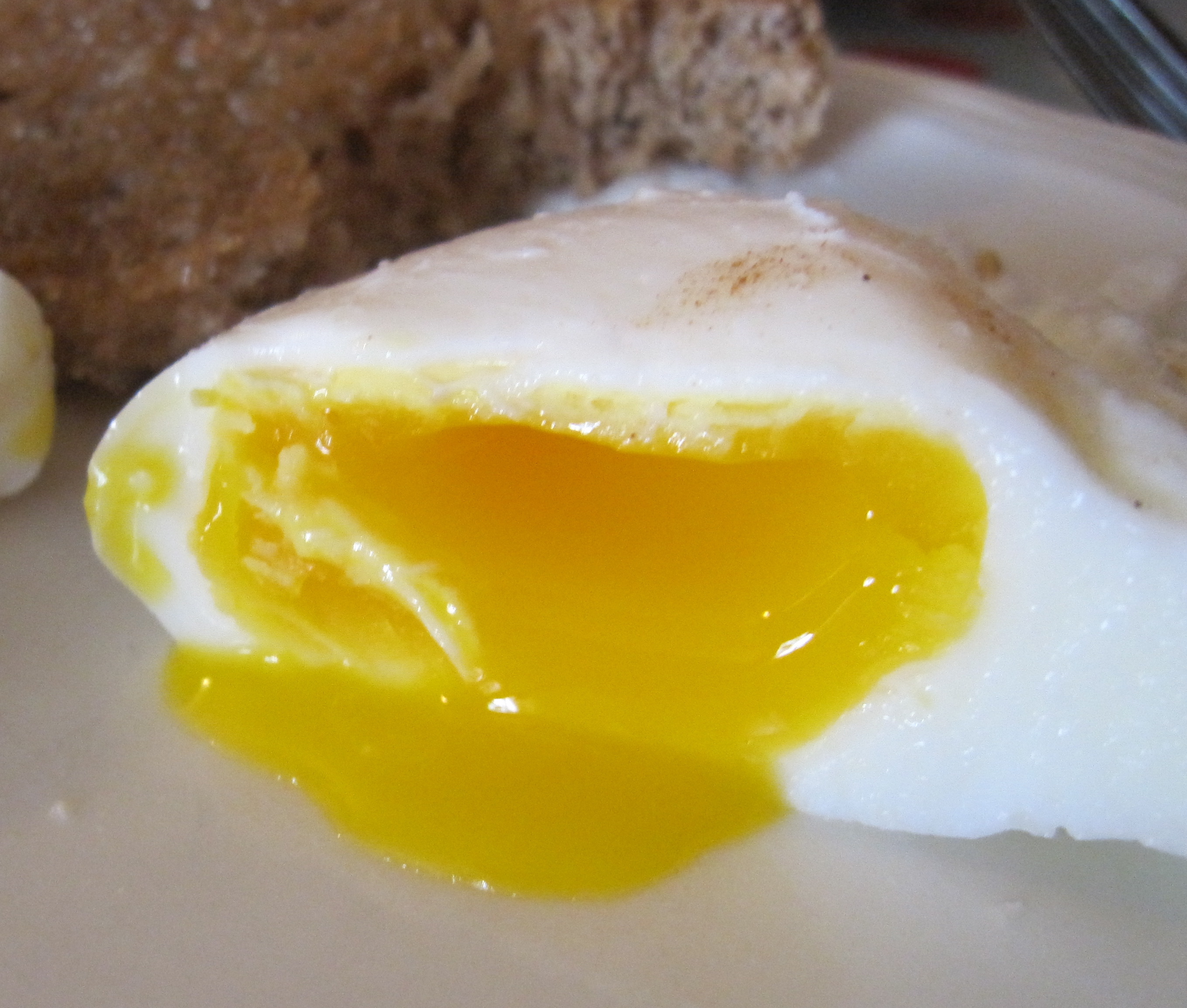
Poached Eggs

If there was one thing I am truly proud of as a mother, it’s the basic necessity of my girls loving runny egg yolks.  Before giving birth to my oldest, I was either an omelet or scrambled eggs lady.  In my postpartum blur in the dreary month of January (there was ice & snow covering the ground for a whole week after V’s birth), my dear father-in-law Steve made me two over easy eggs with buttered toast.  Most things are a blur from that first week (who am I kidding–first couple months), but those eggs.  I never knew they could taste so good.

The whites were set, while the thick, fatty yolk burst out.  I cleaned it up with the buttered toast and I have never looked back.  In fact, I could never be vegan due to the egg.  It’s the most rounded of nutritional value, keeps me more satisfied throughout the morning & the myth of the yolk being a bad cholesterol is probably debunked on snoops.com.

I got this book, The Good Egg by Marie Simmons in an auction last year.  I love how Simmons writes about her love affair with this protein punchers.  I’ve moved on to the poached egg since those postpartum days.  Not only are poached eggs just as easy, they’re so versatile in how you prepare them or eat them.  For breakfast, we eat them with buttered toast or make a sandwich out of them.  I don’t want you to be intimidated by the process, because once you make them again and again–you’re culinary prowess will be more grand.
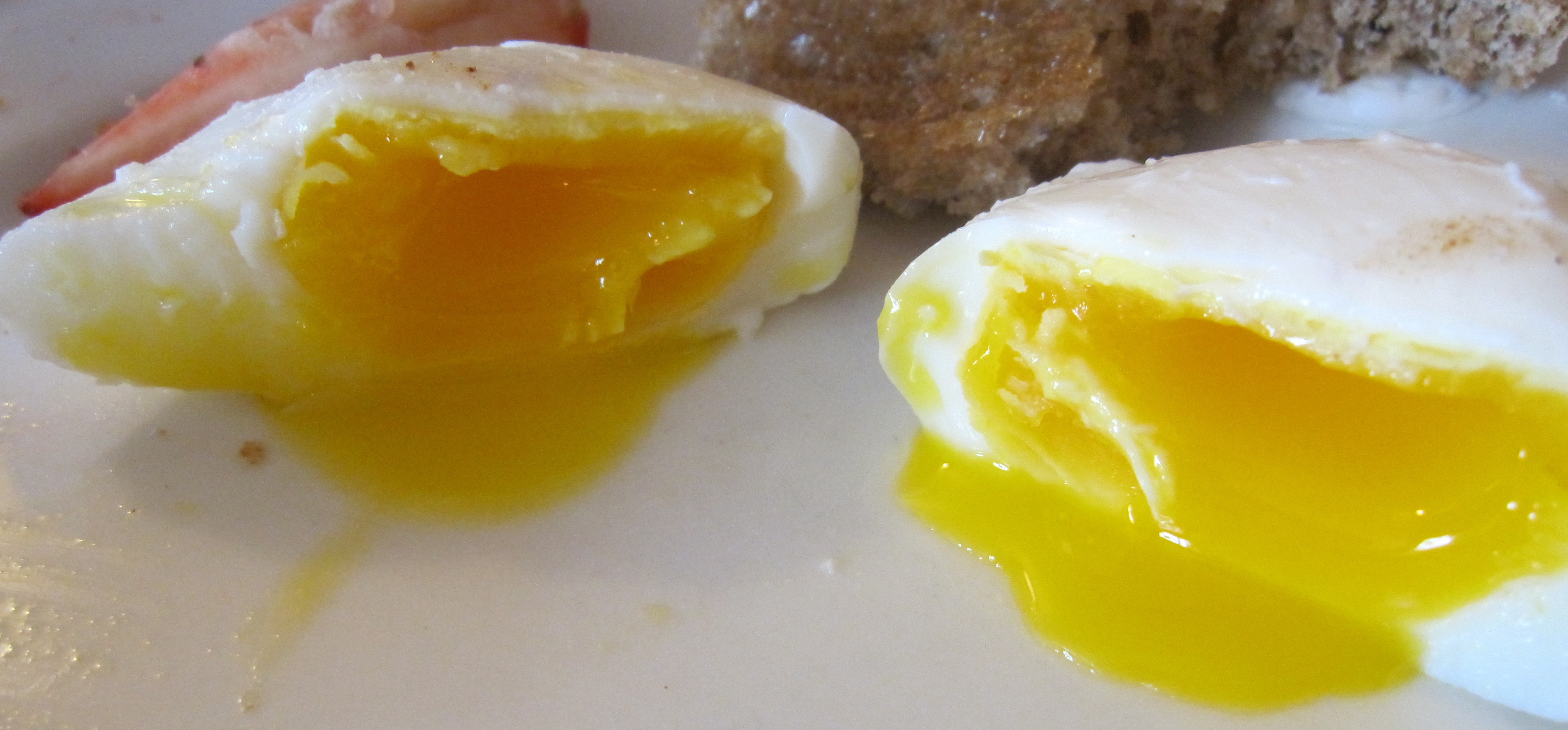
Poached Eggs

When making poached eggs, you will want to use the freshest eggs possible, because the egg whites won’t scatter everywhere when you slide them into the simmering water.  If you don’t have the freshest eggs, then I would advise not making them.  However, Simmons says you could do a “preboil” with the egg still in the shell.  Bring your water to a boil and immerse the egg in the water for 8 seconds & remove.  Then, proceed with poaching instructions.

Ingredients:

4 eggs

white vinegar

kosher salt

freshly cracked pepper

Directions:

  1. Fill a deep 10-inch skillet with water.  Add 1 tsp of salt and 1 Tb of white vinegar for every 2 quarts of water.
  2. Heat the water until it starts simmering, barely.
  3. Using cold eggs, crack one egg at a time into a small dish/bowl/plate.  Gently slip into the water.  Continue adding eggs clockwise, in order to remove them in the same order, along with equal cooking times.
  4. You can adjust the temperature, in order to keep the water at a bare simmer.  If the water starts to boil, then it will cause the egg whites to toughen & feather.
  5. Cook eggs for 1 minute, then gently loosen them off the bottom of the pan.  I turn my eggs in the water, but it’s a matter of preference.
  6. Poach the eggs for 3 to 5 minutes until desired doneness.
  7. Remove them with a slotted spoon in the order they went into the pan.  Gently put them in a shallow bowl, trying to drain excess water.
  8. Salt & pepper them.  Serve with buttered toast, make eggs benedict, or in a salad.

On Roasting a Pumpkin

It should be said, that rarely does anyone photograph or capture the essence of mishaps for their blog. My friend said the other day, in reference to the comparison syndrome (you know, feeling like you just don’t seem to measure up), “that’s why I don’t read other mom’s blogs too often, because they only post the wonderful things they do with their kids and it makes you feel like you’re (and I paraphrase) a Loser!” It’s very true, whether it’s a mom blog, a crafty blog, a food blog, etc, you rarely see or read the disasters.

And to let it be known, I for one am definitely not above disaster. It’s a humbling experience all the same, but it’s what I do with the flop and try to get better. That’s what I love about roasting & pureeing my own pumpkin. It falls under the “from scratch” (even more if I had a yard to grow the squash/pumpkin) category and ultimately makes the recipe taste a little better. I wanted to encourage those of you who think buying canned pumpkin is the only option to step into this safe world of roasting your own.
First things first…pick a sugar pie pumpkin or other squash variety, which suits your culinary needs.  I have for years baked sweet meat squash for my “pumpkin” baking needs and never had any complaints.  My friend Kelli gave me two of her pumpkins from her yard 🙂 Preheat your oven to 450.IMG_4034

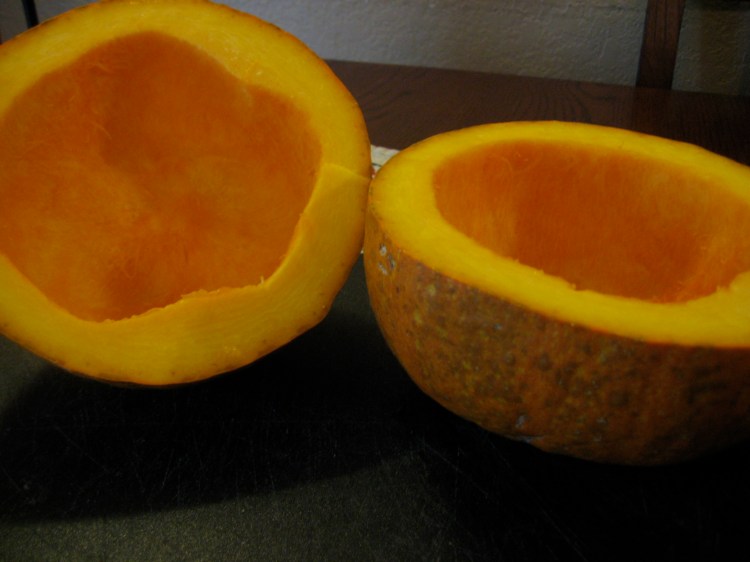
Honestly, the most difficult step is roasting your pumpkin would be cutting the pumpkin.  You really should have a sharp chef’s knife for the job.  You want to cut it down in the middle, with one hand on the handle and the other hand pressing down (gently but with a bit of pressure)  on the blade.  Squash can be a bit sticky, leaving a residue on your hands, which acts a suction device for you knife.  So again, be careful in cutting.

IMG_4035

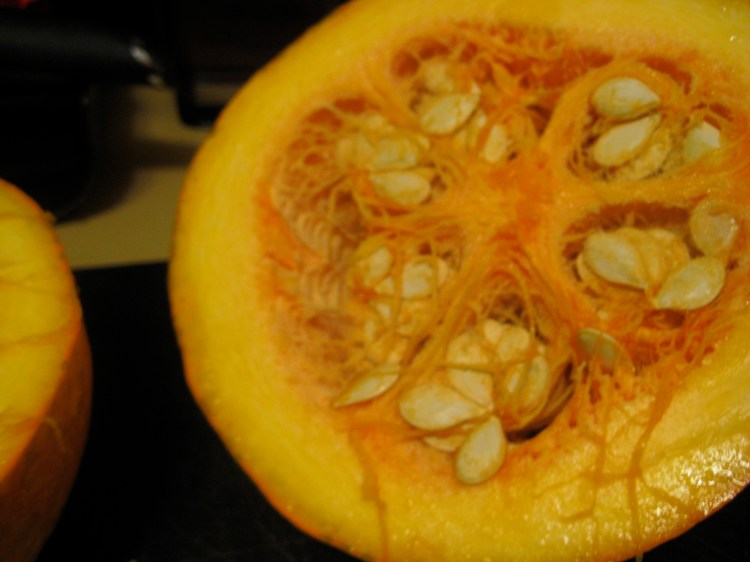
Scoop out all of the seeds and stingage.  Place in a bowl to roast the seeds for later.  Be sure you DO NOT put the insides into your garbage disposal, as it will get caught and the plumber will have to come.  I speak from experience.

IMG_4059

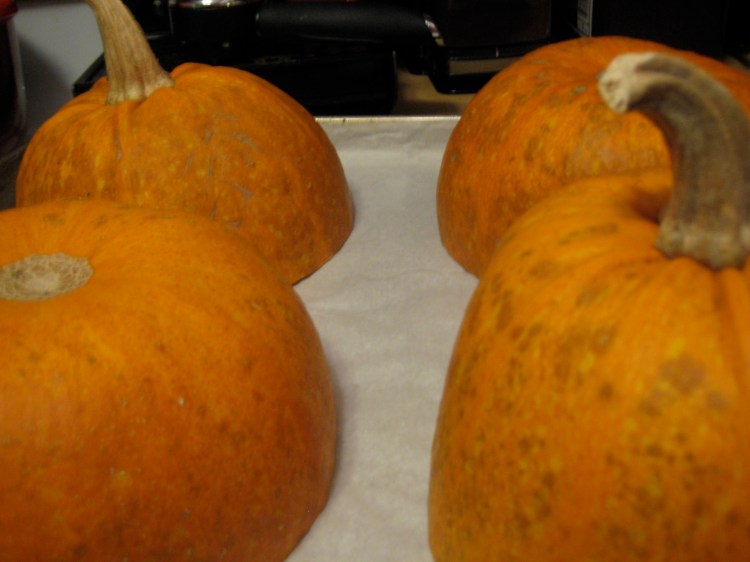
Place your pumpkin cut side down on a parchment lined roasting pan or jelly roll pan.  Pour in some water onto the pan to aid with steam in the oven, because you really don’t want to brown the cut edges.  Put in the oven and bake for 60-90 minutes, depending on the size of your pumpkin.  It will be done when you can pierce through the pumpkin with a knife.

IMG_4067

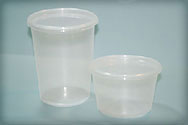
Now how it goes from solid to puree is up for discussion, but this is how I do it.  Scrape the pumpkin meat out and plop it in a food processor.  Don’t overload your processor, but process in batches.  Process till smooth and put into containers.  From here you can use the canning method or freezing method.  I freeze mine, because, well…that’s just what I do.  I used to use freezer ziploc bags until I found these handy plastic containers at Cash & Carry.  I use the 12 ounce ones and I believe they were $2.75 for 50 of them (lids sold separately).  32

IMG_4073

Hope you take advantage of pureeing your own pumpkin and squash!  It’s therapeutic.