Local, Seasonality, Farmer’s Markets

I don’t know what it’s like in your neck of the woods, but here in Bellingham, many people within the community adhere to a buy local, seasonal, fresh food, know the source of your food, truly organic & natural sort of lifestyle.  I’ve mentioned here & here about the book Animal Vegetable Miracle, which is both inspiring & thought provoking when it comes to eating seasonally & locally.  It wasn’t until recently that I actually watched Food Inc.  I know, I know–I figured I knew the jist of it & had read other books about the subject, so I wasn’t in any rush to watch it.  Plus, it’s one of those films that you really need to be in the right mindset to sit down to watch.  And in case you’re not much of a reader, or in general you haven’t viewed it yet–then please do. I think it will make you question the sources of your food & what you can do about providing yourself, your family & others with truly good food.

Food Inc Poster

I wouldn’t call myself an animal rights activist and I’m definitely not just an herbivore.  However, I think over the years in reading Genesis & seeing one of God’s commands to Adam & Eve was being a steward of the Earth–it’s about treating the source of our food well.  In looking at the Israelite tradition of sacrificing an animal, they were given specific instructions from God on how to be humane about the kill & use the whole animal (meaning they did not let this animal die for nothing & throw away the animal’s meat).  Well, after viewing Food Inc. I wasn’t comfortable seeing how the chickens, pigs, & cattle were treated, in order to give food to the masses.  It was as though sanctity of life was thrown to the wind.  The chickens were bred to get fat more quickly than is actually right, in order to produce more chickens in less amount of time.  Meanwhile, these overstuffed birds are too big to walk more than a couple steps.

But the part that hit me the most as a mom was seeing a mom who’s son died after eating a burger on a family vacation, due to e.coli found in the meat.  Her son, Kevin, was around the same age as my oldest.  It made me think of stopping eating fast food in general, where I’m getting my meat sources, & how much would it cost to get meat sources from local families/businesses.

On Meat: I know that when you look at grass-fed beef, open-range/pastured chicken & eggs, & pork–it can get rather expensive.  At least upfront costs are much more expensive.  However, if you take seriously the command in the garden to be stewards of the Earth and look at factory-raised chicken going for $4.00 for a whole broiler–they aren’t factoring in:

  1. environmental impact
  2. health implications upon the consumer
  3. the farming practices of raising the chicken
  4. the money going back into the community you live

I’m sure there are other hidden cost factors that I haven’t mentioned as well.  One option is searching your farmer’s market, 4-H, or internet for local resources of buying a share of a beef cattle, pork, broiler chickens & turkeys.  You can typically buy a quarter, half or whole beef cattle & pork, while buying the whole chicken or turkey.  As for the beef & pork, it is cheaper to buy the whole versus the quarter.  In which case, you could go in with another family (or more).  Check out Eat Wild to find out what is available near your home.

Pastured eggs

On Eggs: Our family probably goes through two – three dozen eggs a week.  We don’t buy as much meat, so I make up in the protein department with eggs.  My oldest absolutely loves them and I’m happy both my girls are runny yolk lovers (is there anything better?).  If you are fortunate to raise your own hens to get eggs–well more power to you.  Here are a couple things to note about egg terminology:

  1. Just because it says “Organic,” does not imply that the hens are free roaming, or even see daylight.  It’s unfortunate to see how this word is more of a marketing plow than standing for the spirit of the word.
  2. Cage-free does not mean the hens are free roaming either.  Nor does it mean they see daylight, get outdoors–it simply means they don’t live in a “cage.”
  3. Free-Range, you would think this would mean the hens are free roaming; however, it’s not necessarily true.  Some just might; but, it is more along the lines of the hens living in a barn with the doors open to a limited bit of outdoor space.  This does mean they get to go out; yet, it could also mean the door is only open at certain times, which limits their intake of bugs & insects to enrich the yolk.  This could also mean that they are in a caged area outside to protect them from predators.
  4. Pastured eggs means the farmer allows the chicken to be outside everyday.  You would have to ask the farmer as to how long they are outside.  The hens eat earthworms, bugs, & other protein enriching critters, which enriches their eggs.  For more info on pastured eggs, go here.

The right is pastered egg

I bought two dozen eggs at the Farmers Market this Saturday.  Today I poached eggs for breakfast and the yolk was totally superior to the other types of eggs I have bought in the past.  It was a bright orange color, while other eggs have been a pale yellow.  One thing I do know is how much more expensive it can be to buy pastured eggs versus factory farmed eggs (sometimes a $3.00 difference).  Here are pastured egg farms in Whatcom County:

On Local & Seasonality:  I really do delight in going to the Farmers Market in Bellingham.  It’s more than just vegetables, artisans, farmers, etc.  It’s the experience.  I have a bit of a ritual in going with my three year old.  We both have our baskets and I look at what is available (in season), while seeing what I actually need in our house.  If you are one who is an aesthetic, than know that you can only use a fraction of what you buy.  I can easily get overwhelmed by the peak of the season availability.

We buy a $1.00 brown sugar shortbread cut out cookie with icing on top from Mt. Bakery about midway through the trip.  We check out what single flower we can get (or find on the ground).  And then, I want to get vegetables that will be out of season before I know it and savor it.  I have been only buying a small portion, in order to spend my money on the best of the best.  Asparagus for instance.  It only has about a 5-6 week window, so we get it.  Eggs are always used in our house, so I buy two dozen.  When strawberries become available, that will be on my list.  I’ve been thinking a lot about eating the fruit & vegetables when they are available and having it constantly in our home while we can.  There is such a difference from eating strawberries farm-direct in June versus ones shipped from Mexico in February.  This is what I’ve been trying to do in our family.

However, is that to say we haven’t eaten strawberries from California recently?  No.  I guess I just don’t make a habit out of it, but I do buy them when my three year old puts them in her little “customer-in-training” cart.  Because I value her want & need to be my helper at the grocery store.

We have used a produce delivery service, Dandelion Organic, which I have been very pleased with.  I have chosen a delivery every other week.  They have a personal bin & a harvest bin.  We get the personal bin and it’s full of organic produce.  They give a list of recipes, in case you don’t know what do with sunchokes, kale raab, or beets.  I have been getting this delivery for over a year now & I’ve been impressed with them a lot.  I might be ending our delivery for a while, because I am wanting to get a CSA instead.

CSA stands for Community Supported Agriculture.  It is basically buying a share of the farm.  There are variations as to how much you want to buy, how long you want it to extend to, and if you want to add extras.  Here are some CSA options in Whatcom County:

  1. Holistic Homestead
  2. Cedarville Farm
  3. Alpenhorn Farm
  4. F.A. Farm
  5. Bellingham Country Gardens

You can go to Community Food Co-op for a complete listing, as some do not have a website, but have information on their farm.

This whole eating healthy, living in an economically unstable environment, making ends meat is a tough paradigm to live under.  My friend Hilary said to me a while back about her friend saying, “Well, buying organic or locally is a nice idea, but not everyone can afford to do that.”  She replied, “Yeah, I know, but maybe it’s up to those of us who can, in order to bring the costs down.”  That has got me thinking about what is my role in this Slowfood/buy local/in season/organic movement.  What do I compromise and what do I not?  Do I buy pastured eggs, but not organic milk?  Do I buy grass-fed beef, while not caring as much about organic produce?  It is hard to draw a line.

What I do know is I am called to be a steward of the Earth.  There are many non-Christ followers doing a better job at this than Christ followers, and that’s a shame when given the Genesis story of the creation.  I’ve seen many blogs devoted to eating this way (Christian and non) and I cannot help but think, how do they afford it?  What is unreasonable & reasonable when it comes to buying food?  Considering your family budget, do you think buying organic or grass-fed or pastured meat is even an option?  How have you made it work?  Do you do most of the preparation of your food–how much time does that take you?  Please add to the discussion.

A No Fuss Sausage Soup

In my life as a blogger I have realized a couple things.  One is that I rarely document actual meals.  I’m more of a baked treat sort of gal.  You know, mama by day renegade baker by night–sort of thing.  Two is that I tend to throw out a lot of posts in one week and then sit back the next couple.  But I find I’m really fine with that.  Well, in fact, I’m fine with both number one & two.

I think the other reason I don’t document many main dishes or side dishes is because they’re finicky.  They require a person, say a mama of two small kids, to actually think out how to get the food to the table by the only source of light on the main floor for a picture (we live in a cave of a condo), while corralling in the children (get utensils, plates, & whiny one year old who should have eaten like 20 minutes before the photo shoot) to eat said food and remember all the ingredients & steps, which went into making the dish.  That’s too much folks.  I don’t get paid for this gig & baking is so much easier (& for me–so much more fun).

But, I have actually taken pictures of a couple food items outside of the “flour, sugar, butter” category and feel like it might be as good a time as any to showcase them.  Here’s how I make dinner.  I’m not a planner really.  I have flops along with the successes.  My kids are not relatively picky, but if I served them an all-you-can-eat fruit buffet, they would never mind.  Some vegetables are hit and miss, but I never stop serving them.  My oldest enjoyed broccoli till 10 months then rejected it every single time until recently.  I give them way out clauses written into dinner, because there are foods I might love most of the time, but at a certain moment it just doesn’t sound too good.

The most planning I have when it comes to a meal is making sure I’ve taken the meat out of the deep freezer the night (or two) beforehand or making dough a couple hours before baking.  I enjoy cooking from scratch.  I love being able to know all the ingredients by name that I’m putting into my families’ bodies.  And that’s why I love to bake as well.  Sure, eating only baked goods isn’t healthy alone or done in excess, but when it’s me doing the baking (instead of say Nabisco) than I know the ingredient list is something I recognize.

Okay, I feel like I’m ranting at this point.  Sorry, I’m done at this point and time.  Maybe it’s because I watched Jaime Oliver’s Food Revolution and read Animal Vegetable Miracle on my vacation.  Both encouraging us to know where our food is coming from, getting back into the kitchen & using fresh/local ingredients.  I have been encouraged to post more recipes that are relatively easy to get those of you who don’t really like to cook–to get in the kitchen and enjoy it more.  So I thought I would post this wonderful soup, which is seriously only like six or seven ingredients.  It’s hearty and not fussy.  And more importantly, my family ate it all up.  Soups are always a sure win in our house for the girls and I hope it is the same for your house.

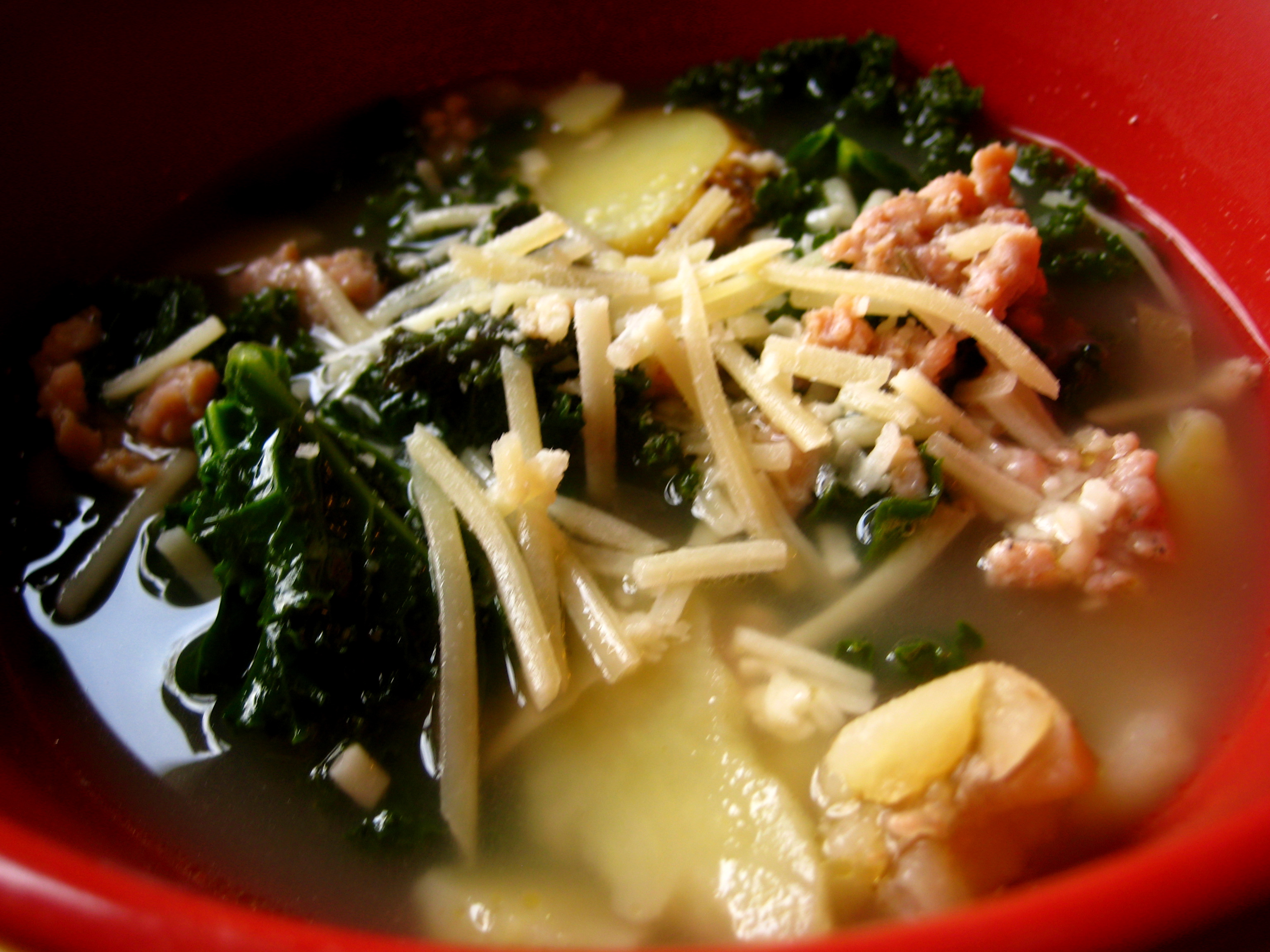
Italian Sausage Kale-Potato Soup (printable recipe)

This recipe is adapted from Epicurious.  I buy Isernio’s sausage & freeze it.  When dinner was coming up quickly, I simply defrosted the chicken sausage & it was cooked in the pot 10 minutes later.  I love Isernio’s sausage.  Also, I keep a bottle of Chardonnay in my fridge with a good cap sealer for cooking.  It’s not the freshest, but I know in most recipes that call for a dry white wine, it is usually at most using 1 cup.

Ingredients:

  • 1-2 Tb olive oil
  • 13.3 ounces Isernio’s Italian Chicken Sausage
  • 3 1/2 cups canned low-salt chicken broth
  • 1 pound small red-skinned potatoes or yukon, thinly sliced
  • 1 cup dry white wine
  • 5 cups thinly sliced trimmed kale leaves (about 3/4 of medium bunch)
  • 1/4 teaspoon fennel seeds, lightly crushed
  • freshly grated Parmesan cheese for topping

Heat olive oil over medium-high heat.  Remove casing from sausages & crumble the sausage into the heated pot.  Sauté sausage until cooked through, about 3-4 minutes. Add chicken broth, sliced potatoes and white wine and bring mixture to boil. Reduce heat to medium, cover and simmer until potatoes are almost tender, about 10 minutes.

Add kale and fennel seeds to soup. Simmer soup uncovered until potatoes and kale are very tender, about 10 minutes longer. Season soup to taste with salt and pepper. Ladle soup into bowls and serve immediately.  Top with Parmesan cheese.

Pseudo, yet easy Chocolate Mousse

With spring’s early advent in the Northwest, one cannot escape the driving urge to buy fresh produce (preferably strawberries & rhubarb) to make a pie or crisp to welcome the May Day in March.  However, as we’ve been fooled into thinking it’s time to pull out our swimsuits & sandals, we cannot escape the reality that it’s not the summer sun shining down quite yet. Hence making it impossible to eat that fresh strawberry-rhubarb pie.

During this Lenten season, our family is eating beans & rice Monday through Friday for dinner, trying to embrace simplicity in our everyday lives.  It’s been a fruitful experience thus far.  It’s also fun to read or hear about a number of individuals eating beans & rice for the whole month of March.  As we’ve been partaking in simplicity for our weeknight dinners, it has made Sunday night dinners extra special.  I made this last Sunday along with this Chocolate Mousse.  I was wanting to make a chocolate cream pie, but it was around 4:00 and my ambitious, idealist nature waved the white flag to that simple, realistic side screaming at the top of its lungs.

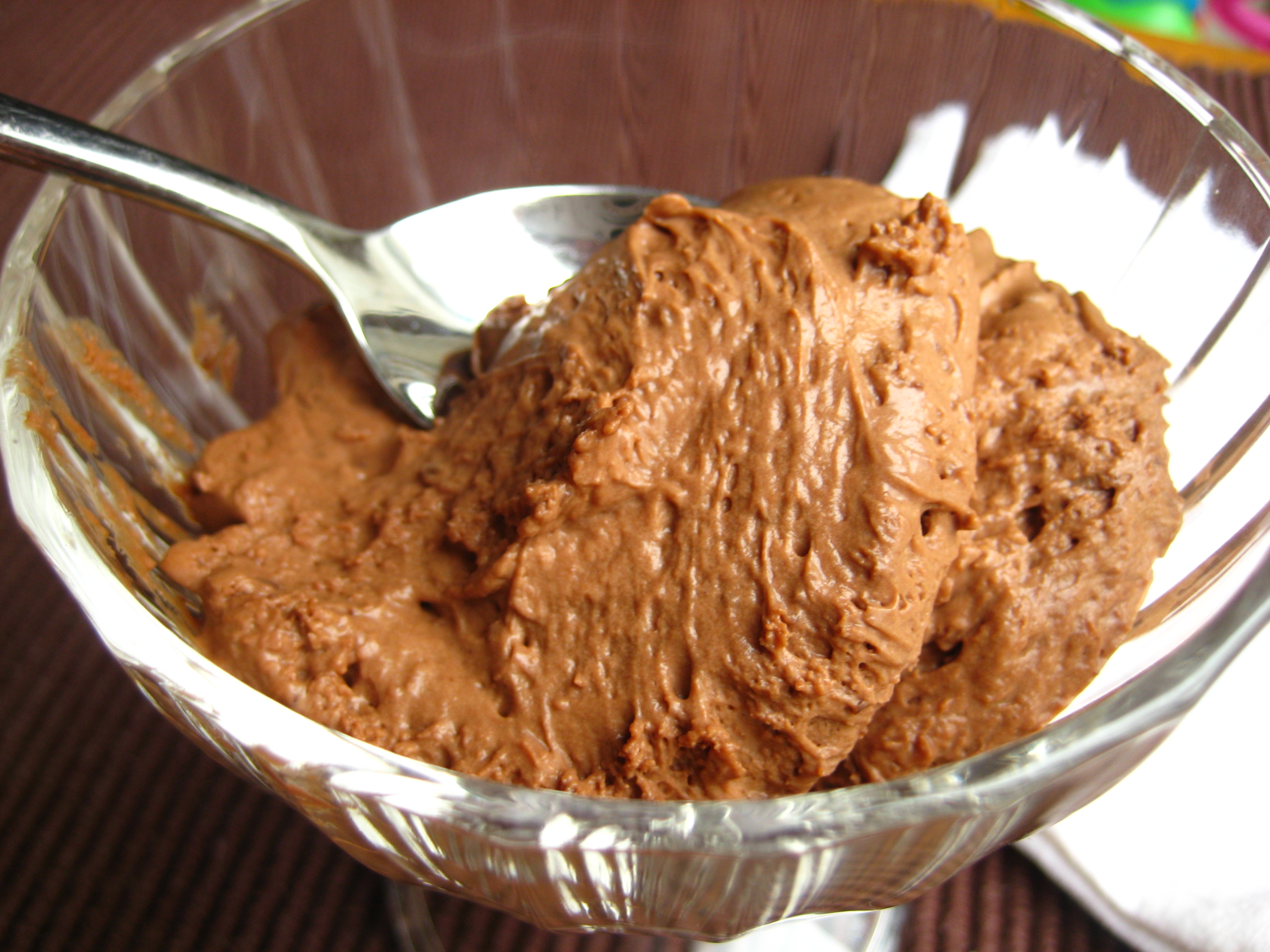
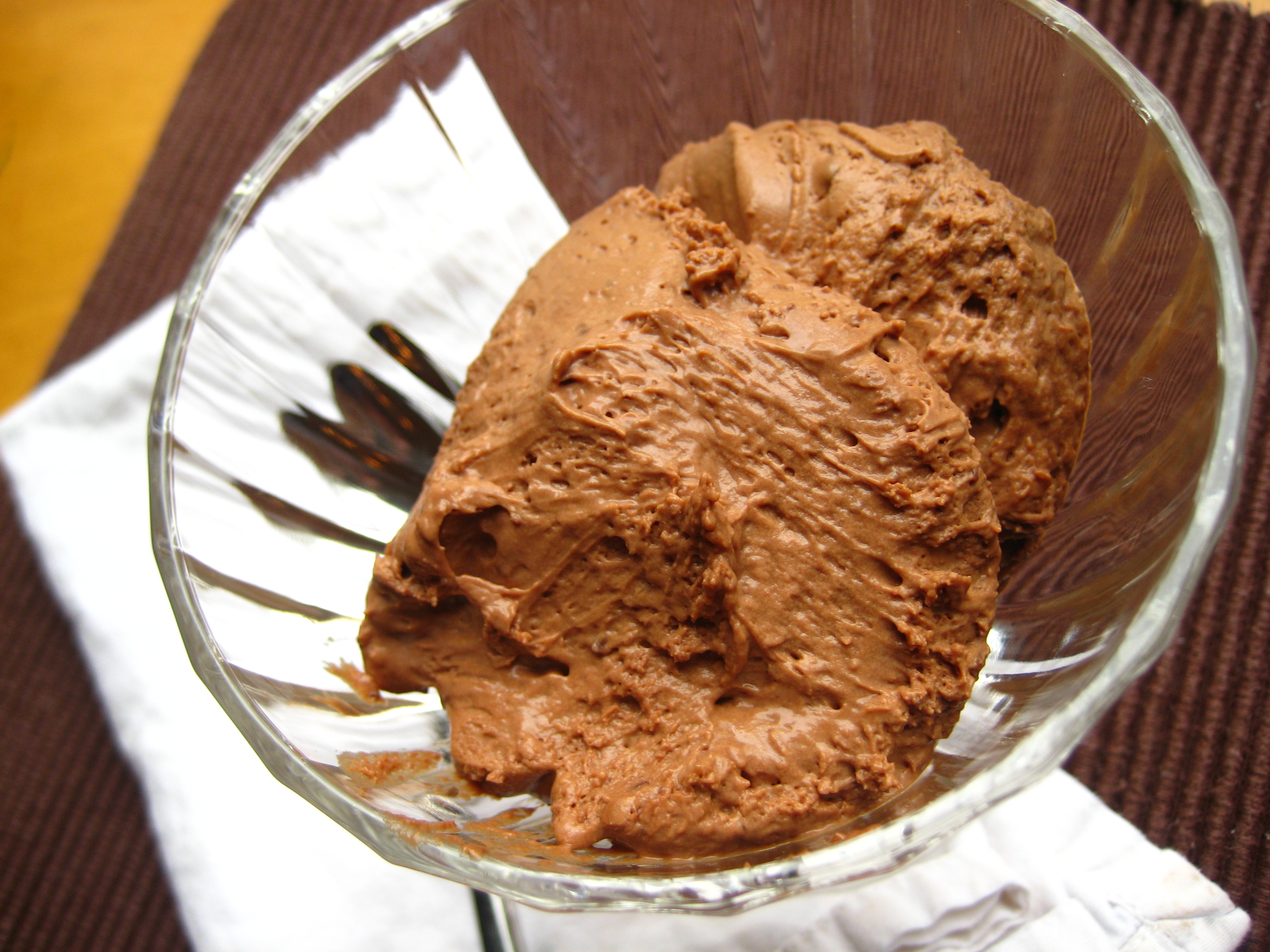
Now this mousse seriously feeds a crowd (I put the rest in a tupperware and sent it to Ben’s work).  It’s creamy, rich and has a chocolate ice cream sort of taste.  If you’re a fan of these and you don’t have much time to make a dessert, I recommend this hand’s down.  And if you’re standing in your kitchen in late Spring when fresh strawberries are available, but your palate is saying, “chocolatey richness!”  Then, make this and top with sliced strawberries–perfectly divine.

Pseudo Chocolate Mousse (printable recipe)

Ingredients:

  • 2 cups heavy cream, cold
  • 12 ounces bittersweet chocolate, I used a bag of Ghiradelli 60% cacao chips
  • 1 can sweetened condensed milk

Directions:

Chill an electric mixing bowl & the whisk attachment for about 10 minutes.

In a small pan, fill with about 1 cup of water and place a heatproof bowl on top.  Make sure the water doesn’t touch the bowl.  Heat over low heat, you want the water to simmer.  Add the chocolate chips or chopped chocolate to the bowl, stirring occasionally until melted.  Once melted, remove bowl from pan and let come to room temperature.

Remove the electric mixing bowl and whisk attachment and attach to the mixer.  Pour in the cold whipping cream and turn your mixer on high speed (10 on Kitchenaid).  Beat until stiff peaks appear, because you’re using the whipped cream as your base for the mousse (about 1 1/2 to 2 minutes).  When you raise your beater, the whipped cream should be able to stand up well on it’s own.

Add the can of sweetened condensed milk to the cooled, melted chocolate.  Stir until thoroughly combined (no streaks remain).  Fold in the whipped cream until no visible streaks remain from the whipped cream.  Cover the bowl with plastic wrap or foil.  Refrigerate for an hour (if you can wait that long).  The longer it sits in the fridge, the more congealed it will get, which is a good thing.

Receiving the Gifter

Our church body has been going through I Corinthians since September.  I have to say that it’s been a wonderful & fulfilling process digging through this letter.  It hasn’t been a quick study, which makes me feel like I have bypassed those awkward first couple of dates and now I’m building a relationship.  One thing we as a large body are doing is memorizing this passage in the Lenten season:

So whether you eat or drink or whatever you do, do it all for the glory of God. Do not cause anyone to stumble, whether Jews, Greeks or the church of God— even as I try to please everyone in every way. For I am not seeking my own good but the good of many, so that they may be saved.  Follow my example, as I follow the example of Christ.

Just the night before I was talking to Ben about stuff in my life revolving around this verse.  One of those things was on food and the ability to use it as an idol of sorts, or even use it to snuff other people.  What got me thinking about it was my friend Talia asking us moms at our Thursday morning playgroup about advice on cooking a steak.  I found myself desperately wanting to give my input and mainly so I would continue to be known as the person who is most knowledgeable about food.  I recalled different instances to Ben that I have done this in the past month.

Most of this was due to pride.  However, what got me thinking a bit further was how easy it is to turn on a snobbery about food.  Not only food, but places I will shop, items I will buy, mantras I will endorse.  Food is such a sticky subject when you get right down to it.  It serves a basic need and provides a creative outlet.  It nourishes & sustains; as well as, stimulates & binds.  I love food for all these reasons.  I am convicted by what I choose to buy for my family, trying to ensure quality while maintaining a modesty, if you will, for those who are starving.  I also understand that as you eat more food, your palate broadens and you become more picky about what you will put into your body.

In Bellingham, we have been a “Green” city long before it was vogue.  Composting, buying local, grass-fed, organic weren’t just marketable clichés, but a way of life for many.  And as we’ve been studying the church of Corinth and some of their issues it has got me thinking about how as a Christian our issues may be different, but attitude has not.  In looking at my culture in my town, these “organic, buy-local, free-range, farmer’s market from the Earth” values are good.  It is both the Christian and the non, seeking to be stewards of the Earth.  However, where I feel like I personally have gone astray is when I’ve taken these inherently good values and made them more important than the person giving a gift.  Let me break it down into a simple story if you’re not tracking with me.

My mom said to me about four years ago that she could get some gift cards from her work (due to some reward thing) for Wal-Mart, which could go towards anything I needed for our first child (I was pregnant at the time).  Now, many people shop at Wal-Mart, but at this moment in time, and then, I don’t–due to moral convictions.  However, what I said in response to my mom is what I would define as a snobbery, which is putting my “values” ahead of the person.  I told her that I wouldn’t really want the gift card, because I don’t want to support Wal-Mart and what they stand for.  In my ignorance, I was thinking I was stomping on feet of injustice.  But really–I was stomping on the generosity of my mother trying to give anything she had for me.  I was putting what I would call a good value ahead of the person.  I was lacking love.

It’s exactly as the writer says in the thirteenth chapter of I Corinthians, “If I give all I possess to the poor and surrender my body to the flames, but have not love, I gain nothing.”  Whenever I put my own agenda, values, or convictions (even if they’re good) ahead of a person who is created in the likeness of God, I defecate on them, because I lack love.  When I snub off a gift of factory farmed chicken, tasteless steak, plastic made toy, dessert from a box, or even (shall I say it) coffee from Folger’s, if I have let these stand above the person, I have lacked love.

But…I don’t want to end with you (or me) thinking it is never okay to hold to standards we’ve set forth.  For me, I have a standard of eating cake from scratch for instance.  However, if my friend invited us over for dinner and she made it from a box, I’m not going to say, “no thanks,” because of it.  Instead, I’m going to delight that my friend loved me enough to prepare something for me; regardless, if it meets my standards, because she meets God’s standards and that’s what love is.  Because I want to receive the gifter more than the gift (yes I know gifter is not a word).

So as any good friend (that I hope to be, even if we’ve never met), I want to share this tangible gift, which comes in the form of creamy, semi-modest, yet flavorful tomatoey (c) goodness.  I have made it a couple times, but the most memorable was for a group of graduating college Seniors for their banquet.  The director of the group had been to many of these banquets over the years and told me this main dish (and the dessert Panna Cotta with Balsamic Strawberries) was the best Senior Banquet meal he had ever had (that’s at least 20 years worth).

Creamy Tomato Sauce with Pasta (printable recipe)

This is an easy gift to give and I doubt many people would refuse it.  It has depth of flavor, creamy, great texture and invites you to serve up another bowl.  Recipe is adapted from Cooks Illustrated.

Ingredients:

  • 3 Tb unsalted butter
  • 1 ounce prosciutto, minced (about 2 Tb)
  • 1 small onion, diced fine (about ¾ cup) [I used shallots this time around]
  • 1 bay leaf
  • pinch of red pepper flakes
  • Kosher salt
  • 3 medium garlic cloves, minced
  • 2 Tb tomato paste
  • 2 ounces oil-packed sun-dried tomatoes, drained, rinsed, patted dry, and chopped coarse
  • ¼ cup plus 2 Tb dry white wine
  • 2 cups plus 2 Tb crushed tomatoes (from one 28-ounce can) [I used whole tomatoes and crushed them in the pan]
  • 1 pound pasta (use a short pasta, ziti, penne, or fusilli)
  • ½ cup heavy cream
  • ground black pepper
  • ¼ cup chopped fresh basil leaves
  • Grated Parmesan cheese, for serving

Directions

1.Melt butter in medium saucepan over medium heat.  Add prosciutto, onion, bay leaf, pepper flakes, and ¼ teaspoon salt; cook, stirring occasionally, until onion is very soft and beginning to turn light gold, 8 to 12 minutes.  Increase heat to medium-high, add garlic, and cook until fragrant, about 30 seconds.  Stir in tomato paste and sun-dried tomatoes and cook, stirring constantly, until slightly darkened, 1 to 2 minutes.  Add ¼ cup wine and cook, stirring frequently, until liquid has evaporated, 1 to 2 minutes.
2.Add 2 cups crushed tomatoes and bring to simmer.  Reduce heat to low, partially cover, and cook, stirring occasionally, until sauce is thickened, 25 to 30 minutes.
3.Meanwhile, bring 4 quarts water to boil.  Add pasta and 1 Tb salt and cook until al dente. Reserve ½ cup cooking water; drain pasta and transfer back to cooking pot.
4.Remove bay leaf from sauce and discard.  Stir cream, remaining 2 Tb crushed tomatoes, and remaining 2 Tb wine into sauce; season to taste with salt & pepper.  Add sauce to cooked pasta, adjusting consistency with up to ½ cup pasta cooking water.  Stir in basil and serve immediately.  Top with Parmesan.

Chocolate Chip Cookie Olympics

I remember sitting on my parents bed watching the opening ceremony of the 1992 Olympics in Barcelona, Spain.  I was eager in anticipation to watch the Women’s (really girls) gymnastic team.  I would study their moves, watch with my jaw dropping at Dominque Dawes floor performance and wonder why my mom didn’t enlist me on my path toward gold medaldom (copyright Kamille) at age 2.  However, once it hit the Atlanta Olympics, where the US Women clinched the gold title with Kerri Strug’s renowned performance on the vault, my interest in the Olympics had hit a standstill.  Not only have they hit a standstill, but a divorce of the relationship.  As I sat around a table of friends discussing how they couldn’t get enough of the Winter Olympics in Vancouver and how they’re a bit sleep deprived as a result, I hated to respond, because I was afraid of the obvious scorn.  I piped in a bit sheepishly, “Yeah, well, I haven’t watched one ounce of Olympic coverage this year.”  Looks were given.  Them trying to be courteous without telling me of my ignorance.

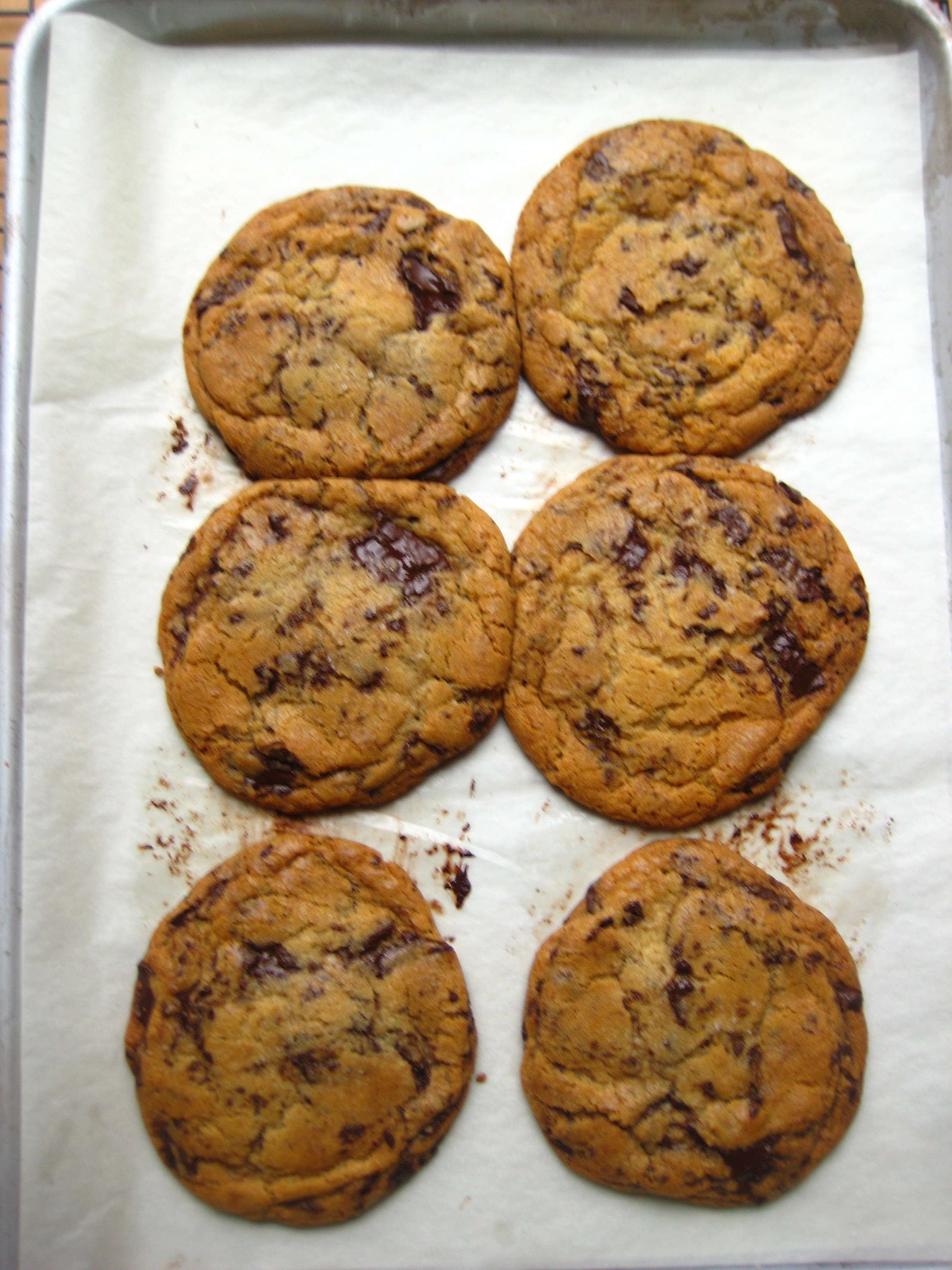
So there you have it.  I’m not an Olympic watcher.  It honestly doesn’t interest me that much anymore.  I understand why people get all excited about it (the various cultures & people represented, the nostalgia, etc, etc); but, really, it’s something I’m not crazy about.  Instead, I have spent the past two days preparing for what I call the Chocolate Chip Cookie Olympics.  Now this is something I get excited about.  A chocolate chip cookie can bring people together or tear them apart.  You understand.  You walk into a coffee shop and they have those big chocolate chip cookies in the big glass container and you pause.  You really want to eat one, but you wonder if they meet the criteria.  You could possibly end up hashing out $1.50 – 2.00 on a waste of your daily caloric intake.  I would wager to say that there is nothing quite as disappointing as biting into what looks like the promise land flowing of chocolate chips & butter to find a C.C.C. disguised as a dry sand-like substance floating around your mouth.  We’ve all been there.  So I set out to make three different chocolate chip cookie recipes, where I would present them to my tasters and they would judge & award gold, silver, & bronze.

Superlative Chocolate Chip Cookies (Cooks Illustrated)

I first made these Superlative Chocolate Chip Cookies from Cooks Illustrated in late summer (click on the above picture and it will take you there).  These cookies probably have one of the most superb flavor profiles you’ll find.  I chose this recipe, because it is my favorite chocolate chip recipe.  The recipe calls for chocolate chips & toasted pecans.  There are chocolate chip recipes masquerading as “chocolate chip cookies,” but they’re not true to the definition.  The ones that include oats, dried fruit, nut butters, coconut, etc.  They’re good for sure, but for the sake of all things being equal.  I was on the search of a true chocolate chip cookie, no strings attached.  So for this round, I took out the toasted pecans to make it equal among the other two candidates.

The other two contestants were the classic N.Y. Times chocolate chip cookie & a recipe claimed as the best chocolate chip cookie from ‘Not Without Salt‘ blog.  A word why these two were chosen.  My friend Paige loves to bake equally as much and I would say enjoys food more than I do (that’s a compliment by the way).  She has mentioned that these are her family’s chocolate chip cookie of choice.  After I posted on the Superlative C.C.C., she commented that her & her husband Stephen still found their aged cookie to be better.  I still never made them.  Then, a couple days ago, a friend Julie emailed me about the best cookies she ever tasted with sea salt on top.  Guess which cookie she was talking about?  Yup!  N.Y. Times C.C.C.  So they were enlisted immediately.  And the last cookie was enlisted because Ashley Rodriguez of Not Without Salt was the former Pastry Chef of Ciao Thyme in Bellingham.  I trusted the head chef Matio Gillis’ opinion of Ashley, so when she said her’s were the best, I thought, “heck, I need to try them.”  And so goes the C.C.C. Olympics.

I made each of the cookies warm to order, so all of the tasters ate them warm.  I however, didn’t make them equal in using the same type of chocolate for each, which caused a bit of discrepancy in the final tasting (but I did take that into account for the final tallying).  I will go through each cookie stating the Pros & Cons.

Cooks Illustrated Cookie

Pros: Tasters said these had the best flavor of the three.  They noted, “buttery, salty, caramel & toffee, nutty…tastes like a blondie in cookie form…chewy, with crisp edges.”  These cookies don’t need to sit in the fridge for 24 to 36 hours to get those flavors, like the N.Y. Times cookie.  They don’t require a mixer, just a whisk.

Cons: Texture didn’t win as big on these.  Although they were chewy, they lacked the combination of soft, chewy that one taster found she liked in the “Subway Chocolate Chip Cookie.”  Upon sitting at room temperature, these cookies tend to dry out a bit faster. One taster said that he didn’t care for the chocolate in these cookies, compared to the N.Y.Times one.  However, I did use different chocolate chips in both, so had I used the same kind, the outcome could have been different.  Doesn’t make as many cookies as the other recipes.

Technique: The caramel, toffee, nutty taste comes from melting the butter and toasting it; rather, than the typical creaming method.  By melting the butter, you’re taking out some of the liquid found in the solidified butter and lends to a chewier cookie.  Also, by using one egg & one egg yolk, you create more chew and take away the protein found in the extra white, which cuts back the dryness factor.  I chilled this dough for 12 hours in the fridge and measured all the ingredients; as well as, measuring each cookie to 3 1/2 ounces to bake.

NY Times Cookie

Pros:  The tasters were unanimous about loving the texture on this cookie.  As one taster mentioned sheepishly, “It tastes like, don’t judge me, but like the Subway cookies, a bit of chew, softness, chocolate chunk, and melds together well.”  Another taster said, “as a chocolate chip cookie purist, this one wins for me.  This is what I think of when you say Chocolate Chip Cookie.”  For me, I did two tastings.  One at 36 hours of aging the dough and another at 41 hours, and I would say that this cookie tasted better the second time.  The first tasting I didn’t taste strong notes of toffee, caramel, or butterscotch like the article said it would have at 36 hours.  However, I did taste it at the 41 hour mark. They still have softness after sitting on the counter (wrapped up) 24 hours later.

Cons: They take 36 hours in the fridge before they’re ready.  And if you want more depth of flavor, leave them in there up to 72 hours (reminded me of how long a baby can stay in the womb once the mama’s water breaks–weird, huh?).  The flavor wasn’t as stand out as the Cooks Illustrated.

Technique:  What makes these cookies stand out is letting them sit in the fridge for up to 36 hours before baking them.  And you sprinkle sea salt on top to let the flavors pop.  By letting the dough age, you’re allowing the proteins in the flour meld with the butter, sugar & salt to create a broader flavor profile.  You also use two different flours (cake flour & bread flour), which create a wonderful marriage in the chemistry arena of the baking process.  Cake flour with low proteins doesn’t suck up liquid like bread flour; rather, cake flour’s low protein creates a softer, paler end product along with the protein creating steam with the liquids.  Bread flour with it’s higher protein browns faster and sucks up the liquid.  So if you only used cake flour, you would have a cakey cookie, lacking any chewiness or a bit of a crust.  However, if you only used bread flour, you would end up with a very brown, crisp cookie.  Hence the perfect marriage.  I also used 60% & 70% cacao, along with some milk chocolate chunks in this dough.

Not Without Salt Cookie

Pros: This was the least loved.  Tasters said it was fine, and a nice fall back option.  The dough was a bit above average (C+).  The sprinkling of sea salt added that pop flavor. I could note a bit uniqueness in the crust, which might be attributed to the use of Turbinado sugar.  I had a bit of caramel tones.

Cons: Too much chocolate (the recipe called for quite a bit), lacked anything special about it.  It was okay, but not the best.

Technique: I went ahead and let this one sit in the fridge for 36 hours too, but it never aged as well as the N.Y. Times cookie.  If I were to make these again, I wouldn’t use as much chocolate as the recipe called for, because it ended up feeling like you were eating chocolate with some cookie, not the other way around.  Sprinkling Fleur de Sal on top before baking lends something extraordinary to even the most ordinary chocolate chip doughs.

Results:  The tasters were not unanimous in their decisions.  One said her favorite was the Cooks Illustrated.  Three other tasters said the N.Y. Times one was their favorite.  And as one taster said, “Although the flavor of the C.I. cookie is superior to the N.Y. Times one, the N.Y. Times has great texture and slightly inferior flavor, but makes it a better cookie since it meets both standards–regardless if the flavor isn’t as superior.”

So if you have time on your hand (41 hours to 72 hours), make the N.Y. Times cookies.  However, if you want warm cookies right now, make the Cooks Illustrated. The comparison between the two reminds me of Michael Phelp’s Miracle finish.  So you be the judge and make both–let me know what you think.

Overall Scores:

Gold to N.Y. Times

Silver to Cooks Illustrated

Bronze to Not Without Salt

Update (2/28/2010):  I did not use the feves talked about in the N.Y. Times recipe.  Instead, I bought a pound of chocolate from Trader Joe’s (70%) and cut it into smaller chunks with a serrated knife.  I did the same with some milk chocolate I have in bulk.  You could use packaged chocolate chunks as well.  I feel like the chocolate chip texture doesn’t hit the spot as well as chunk form.

Crafting Hospitality

Last night as I was pulling the pork apart, I was reminded of my soon to be brother-in-law’s art show back in August. You see, if you’ve ever met Bob without a long sleeve shirt on or a jacket, you are sure to notice the tatoo of a pig on his forearm. It’s quite catching and then a conversation into the land of pork and all things so wonderful around this magnificent of animals comes protruding forth. Bob is marrying my sister-in-law Amber(Ben’s sister) and I can wholeheartedly say how much we all love him and are very thankful he is joining the family. Not only can we talk food shop, but he knows a thing or two about pottery & ceramics.

It was in August that he had his senior project (via art show)/presentation, where he spoke briefly about his ceramic creations, we toured his exhibit, we ate his pulled pork (that he smoked), drank bourbon & whiskey, and had a wonderful time in doing it. What struck me most (that I have yet to encapsulate until now) on that idyllic Seattle summer evening was what Bob spoke about in regards to his work. He said (paraphrasing) that he viewed his pottery as a form of hospitality. He chooses to create cups, bowls, decanters–some of the more practical items with clay, in order to serve the food he loves (pulled pork, bourbon, waffles for post-Christmas breakfast) for people he loves.

It is through his passion of creating, molding, glazing & firing clay with his hands that he is creating unique forms of hospitality. We as the recipients get a taste of appreciation eating and drinking off these tangible pottery pieces. Bob delivers a bit of his passion & hard work (all forms of hospitable acts) to us. So if you’re one of those people wondering “how in the world can I deliver a bit of hospitality?” I would suggest making a special meal that took a bit more time for your family or guests, pulling out the nicer dinnerware just because, or even lighting candles to communicate that we can intertwine ordinary & sacred time together. Seeing that we take the time to give attention to details occasionally throughout our week.

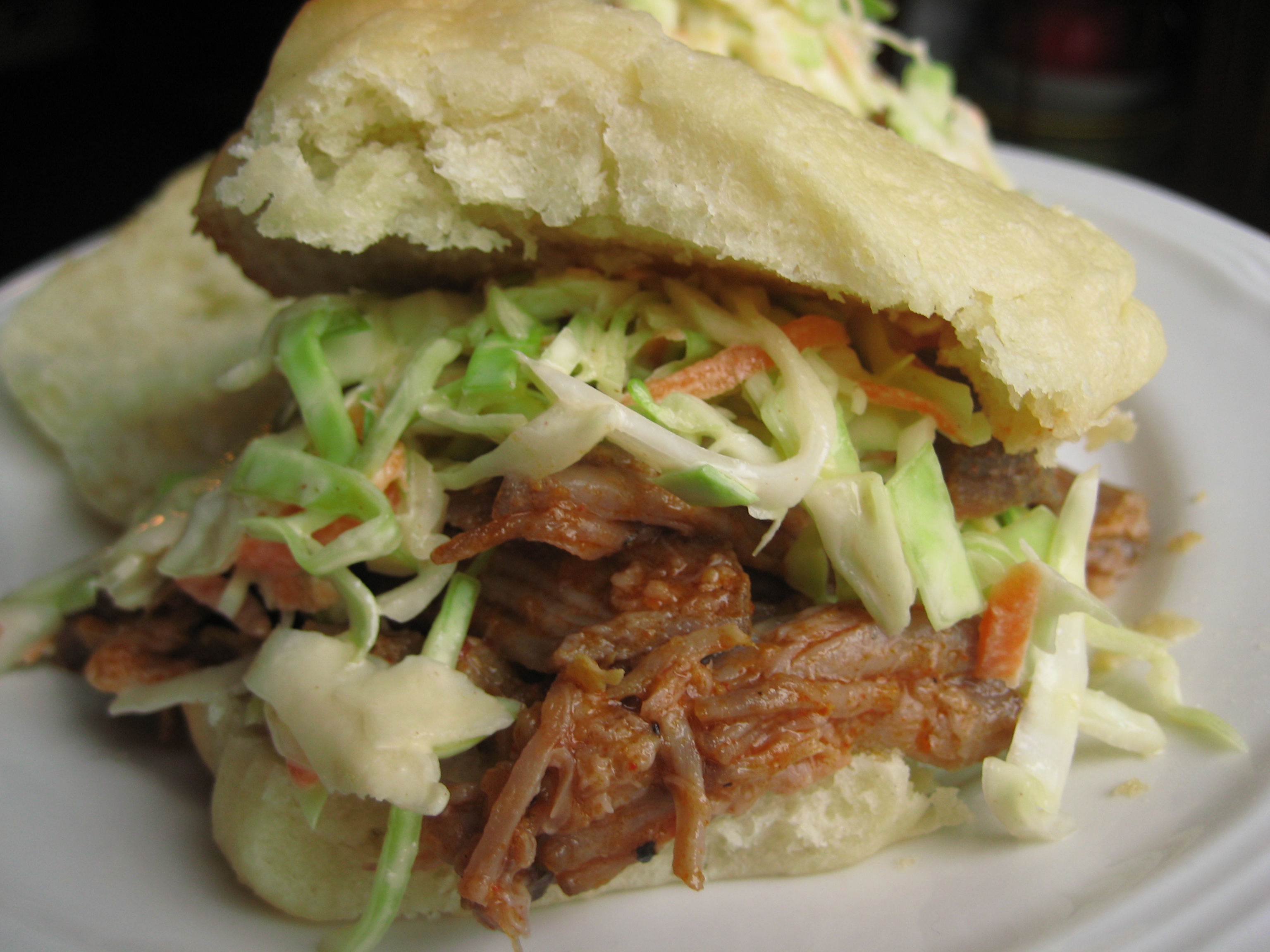
So, if you’re up for it…you could make this indoor pulled pork. I’m telling you right now that it takes time, but the end result is full reward. When I was pregnant with my youngest I got addicted to pulled pork sandwiches. And ya know that craving has yet to leave my system and I have yet to find a place in Bellingham that satisfies what I’m looking for. However, after eating this last night, I feel like I’ve found it. I was in line at the grocery store and I saw the Cooks Illustrated magazine with the words ‘Indoor Pulled Pork’ and knew I had to buy it, because I don’t have a smoker and C.I. rarely fails me. Well, after a total of 6 1/2 to 7 hours I finally got rewarded for my hard work (more like my patience). This would fall under the category of a comfort yet special dinner with a touch of Southern goodness.

Indoor Pulled Pork (printable recipe)

I think pulled pork topped with slaw is not only quintessential, but essential. These two have a symbiotic relationship, so don’t forget to top it with slaw. I used pork shoulder rather than pork butt and chose the Lexington Vinegar Sauce mainly because I had all the ingredients for it versus the other two options. I would wager to say that you wouldn’t be able to tell that this was cooked without the use of a smoker.

Pork:

1 cup plus 2 tsp salt
1/2 cup plus 2 Tb sugar
3 Tb plus 2 tsp liquid smoke
1 boneless pork butt (5 lbs), cut in half horizontally or pork shoulder strips
1/4 cup yellow mustard
2 Tb ground black pepper
2 Tb smoked paprika
1 tsp cayenne pepper

Lexington Vinegar Barbecue Sauce

1 cup apple cider vinegar
1/2 cup ketchup
1/2 cup water
1 Tb sugar
3/4 tsp salt
3/4 tsp red pepper flakes
1/2 tsp ground black pepper

  1. FOR THE PORK: Dissolve 1 cup salt, 1/2 cup sugar, and 3 tablespoons liquid smoke in 4 quarts cold water in large container.  Submerge pork in brine, cover with plastic wrap, and refrigerate for 2 hours.
  2. While the pork brines, combine mustard and remaining 2 teaspoons liquid smoke in small bowl; set aside.  Combine black pepper, paprika, remaining 2 tablespoons sugar, remaining 2 teaspoons salt, and cayenne in second small bowl; set aside.  Adjust oven rack to lower-middle position and heat oven to 325 degrees.
  3. Remove pork from brine and dry thoroughly with paper towels.  Rub mustard mixture over entire surface of each piece of pork.  Sprinkle entire surface of each piece with spice mixture.  Place pork on wire rack set inside foil-lined rimmed baking sheet.  Place piece of parchment paper over pork, then cover with sheet of aluminum foil, sealing edges to prevent moisture from escaping.  Roast pork for 3 hours.
  4. Remove pork from oven; remove and discard foil and parchment.  Carefully pour off liquid in bottom of baking sheet into a fat separator (or a big enough bowl and use a baster to get the liquid below the fat) and reserve for sauce.  Return pork to oven and cook, uncovered, until well browned, tender, and internal temperature registers 200 degrees on instant-read thermometer, about 1 1/2 hours.  Transfer pork to serving dish, tent loosely with foil, and let rest for 20 minutes.
  5. FOR THE SAUCE: While pork rests, pour 1/2 cup of defatted cooking liquid from fat separator (or from baster) into medium bowl; whisk into sauce ingredients.
  6. Shred pork either with your hands or with two forks into bite-sized pieces.  Toss with sauce and serve on warm rolls topped with coleslaw.

Making the Lexington Vinegar Barbecue Sauce: Combine all the ingredients in a bowl with 1/2 cup of defatted cooking liquid and whisk to combine.

Easy Coleslaw:

1/2 head of cabbage, thinly sliced with chef knife

1 peeled carrot, grated

1/4 cup mayonnaise

1/8 cup (2 Tb) buttermilk

2-3 Tb honey

1 Tb dijon mustard

splash of apple cider vinegar, regular vinegar, or lemon (basically you need an acid)

salt to taste

Mix all the dressing ingredients together and taste.  If it tastes too much like mayo, then add a bit more honey, vinegar & salt.  Dump on the sliced cabbage and grated carrot and toss.

Posole

…and my daughter LOVES dinner.  When my oldest was a baby and young toddler she loved food.  The only food she rejected by 11 months was broccoli (still does & I still serve it).  I could count on her to fill mama’s affirmation piggy bank when it came to dinner time with her moans of glee.  When she turned 18 months, I thought I had it made because she never turned to the dark side (a.k.a. the food refusal face) and I must be doing something right.  She ate veggies and I rarely gave her sweets, then it was around 22 months or so and little by little…another food was on the banned list.

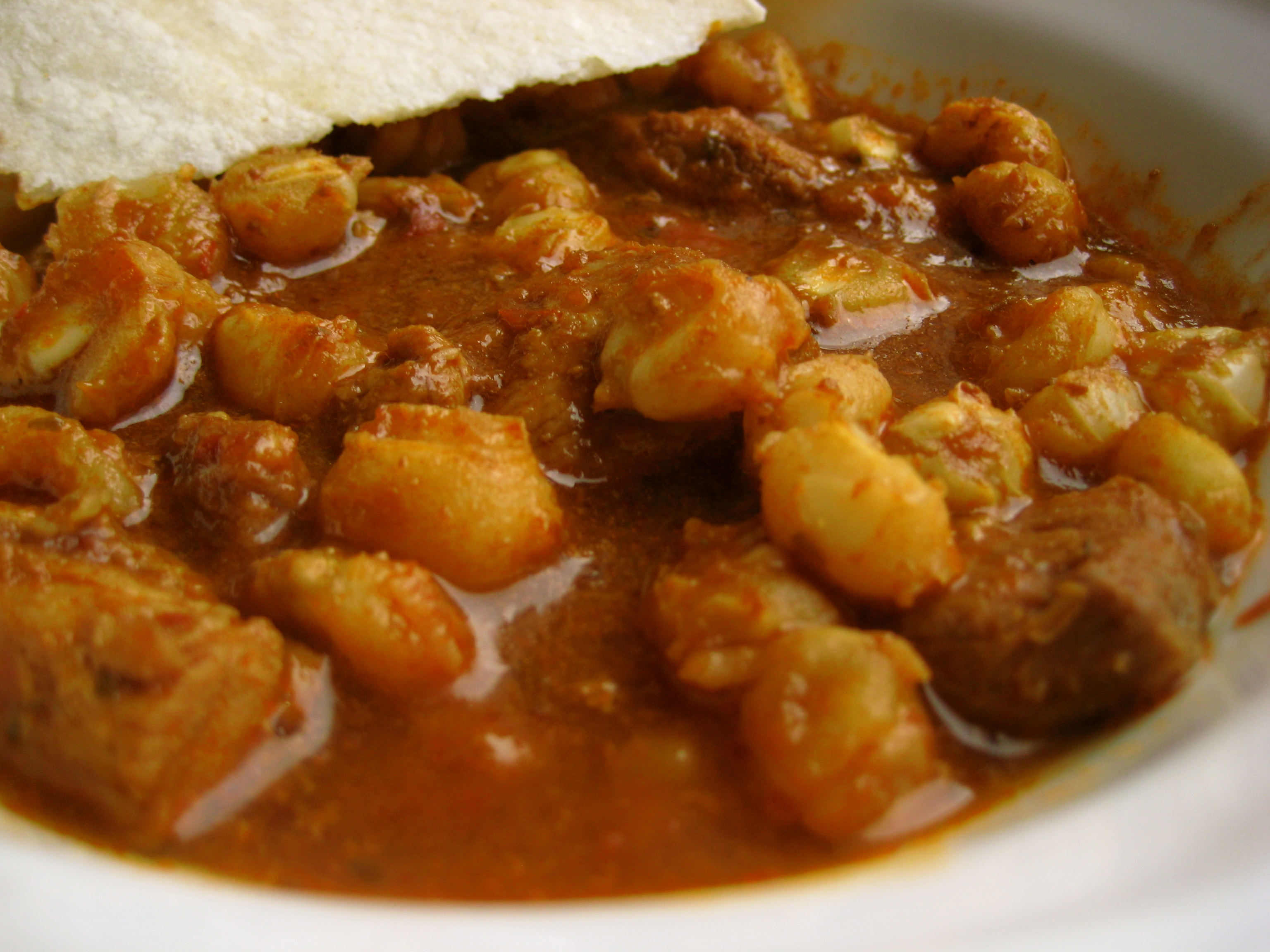
Now as we celebrate her birthday week (turning three or “free”), she continues to throw a curve ball during dinner time.  As I wait for her to say something like, “This is too gross for me!”  She says, “I like my Posole!”  Yes, I train my daughter in all things food.

A.) Don’t buy eggs with cracks…to which she continued chanting in the store to check-out.

B.) “Add a little cardamom & nutmeg”…she says this during pretend play (or was it while teaching a baking class about cardamom to her papa & auntie?)

C.) I say, “this is Posole, it’s part of your heritage,”…to which she replies, “more pork.”

And to that I say, “Eat more pork and make yourself some Posole!”  It’s like eating pockets of tamales in stew form…doesn’t get much better.

Posole (printable recipe)

Recipe is adapted from Gourmet.  As I said, I find the hominy reminiscient of the cooked masa found in tamales.  This is not overly spicy.  If you avoid spicy food, then add sour cream as dairy lessens heat.  Plus, my 13 month old & almost 3 year old ate it asking for seconds & then some.

Ingredients:

2 dried guajillo chiles

2 dried New Mexico chiles

2 cups water

2 teaspoons dried oregano, preferably Mexican

1 1/2 teaspoons salt

1/2 teaspoons ground cumin

1/2 teaspoon freshly ground pepper

1/2 can of stewed tomatoes, chopped

1/2 yellow onion, coarsely chopped (3/4 cup)

2 pounds boneless pork shoulder, trimmed of excess fat and cut into 1-inch cubes (I used about 24 oz)

2 (29 oz) cans white hominy, drained & rinsed

Directions:

Stem and seed chiles.  Combine with 2 cups water in a small saucepan, bring to a simmer, and simmer until softened, about 15 minutes.

Transfer chiles, with cooking water, to a blender.  Add remaining ingredients except pork and hominy and blend until smooth (use caution).

Transfer chile puree to a 4-quart heavy saucepan, stir in pork, and bring to a boil.  Reduce heat, cover, and simmer, stirring occasionally, for 1 hour.

Add hominy and simmer, covered, until pork is tender, about 30 minutes more.  Skim fat from sauce and season posole with salt to taste.  Serve with sliced cabbage, corn tortillas, sliced radishes, lime wedges, sour cream, fresh cilantro, or tortilla chips.

Roasting a Chicken or Cleaning Carpet

I love birth stories.  I especially love being able to make a meal for a newly sleep deprived mother who has NO idea of what she just got herself into, because I’ve been there.  And what I appreciated the most after having my oldest was the abundance of food delivered each night and the various people “oooing & awwwing” over my beautiful baby.  Seriously, what could be better?  Sleep, but we all know that’s not gonna happen, so might as well take the food.

Well, I had two roasting chickens that I planned on roasting at the same time (one for our family and one for my friend).  And after we ate our chicken, I would use the carcass to make some chicken stock.  Both girls were sound asleep still at 4:00, which is a miracle in and of itself and gave me some extra time to cook.  But as any mother would tell you, all good things must come to an end and reality sets in.  The end of nap time  makes me feel like Cinderella when the clock strikes midnight and my dress turns to rags and coach turns to a pumpkin…and I become mama again.

This mama had her almost three year old to tend to and slowly got her entertained with a new dollhouse.  I let her be, in order to get my youngest who was crying.  Note to self: never underestimate the capabilities of a little girl who’s middle name is “monkey business.”  As I was changing a diaper, I was thinking how everything was going according to schedule.  The chicken would be done in about five minutes, my cranberry crostata (which I’ll post at a later date) was cooling on the counter, daddy would be home in less than 10 minutes (date night after dinner) and I would get to visit my friend’s newborn baby boy shortly.

Then, I hear a monkey pants coming up the stairs going on & on about something.  And as I turn to see what she’s talking about my mouth drops.  I hurriedly set my youngest back in the crib and picked up my oldest to head to the bathtub.  What she was saying was, “I painted on myself, I painted on my clothes!”  She has absolutely no guile in her bones.  She definitely stopped chanting her fresco debut once I stripped her down and got the water running, which turned into cries of, “I want my blankie!”

All this to say…the chickens turned out well, but we didn’t eat together as a family, because I had to get some cleaner at the store.  Our date night was obliterated, since my husband and I were stuck spending our evening trying to scrub the food coloring gel out of the two flights of stairs and carpet in the basement (oh yes, she was painting herself with pink food coloring gel to resemble frosting).  My eldest, a.k.a. monkey pants, went to bed with painted on pink socks, pink/reddish hands, and one bright pink cheek.  And I forgot to tell Ben to save the carcass, so when I got home from dropping off the dinner and picking up the cleaning supplies I asked, “You didn’t throw away the chicken carcass, did you?”  My destiny for the evening was sealed and that was the last straw.  I felt like stamping my feet, throwing myself on the ground and flail about, but I’m the grown up right.

Instead, I took a couple deep breaths, nursed my youngest, said goodnight to monkey pants and started blotting the pink stains with my hubby.  We soon waved the white flag of defeat, because this pink stain might just be here to stay (the carpet cleaners are closed for the night…we’ll see tomorrow).  As Ben and I breathed in the lovely fumes of various cleaners we were using, I asked Ben, “What could be worse?”  He said, “Being in the hospital right now with Veronica, because she got into something that was toxic.”  I liked hearing that.

It made cleaning the carpet even more therapeutic and peaceful.  It’s only carpet, and Lord knows there’s probably going to be more stains to add to the pink punk rock hue.   And although we missed our date night,  I was thankful that it was only food coloring gel and not something worse.  I was even thankful for the great story this would be for years to come.  It’s moments like these that keep me on my toes as a mother and I know when I look back 20 years from now, I’ll take the pink carpet over delicious chicken any day of the week.

Day One & Two

IMG_3760

Chicken pot pie–comfort food!

Today was my first day of my cooking class.  It was so relaxing to be able to learn & do something I thoroughly enjoy without two little ones at my feet.  The majority of my cooking & baking knowledge is through trial & error and being self-taught via books.  (I did take three years of home economics in junior high).  I wasn’t fortunate enough to glean too much experience in the kitchen from my parents or grandparents either, which makes this ‘culinary intensive class’ a suitable fit for me.

So like I said in my last post about not being a novice in the kitchen, I’m finding that taking this three-day class is the best way for me to get hands on experience, knowledge, & visual teaching that I would otherwise not get.  When looking at a cookbook there are so many classic dishes that I would love to make (or even learning classic techniques) & learn in a classroom setting.  Now we didn’t make any demi-glace (which is what I would have loved to do), but we did break down a whole chicken to all it’s specific pieces (learning the different cuts, breaking points, and separating the thigh bone out of the thigh meat), and how much more cost effective it is to buy a whole chicken than simply buy chicken breasts, thighs, or drumsticks individually cut.  Plus, there is something so empowering about doing it yourself.  I highly recommend it.  Actually, I’m going to buy a boning knife soon, along with a whole chicken simply to do it (yes I’m a nerd).

IMG_3759

Brussel Sprouts with diced onions & pancetta

We also worked on making our own vinaigrette.  Basically in making your own vinaigrette you want a 3:1 ratio of oil to acid (unless it’s something like lemon juice where you want equal parts), along with other parts (i.e. salt, pepper, dijon, etc).  We made a lot of different food, which were shared in a communal dinner.  It’s been really wonderful–truly truly.

IMG_3754

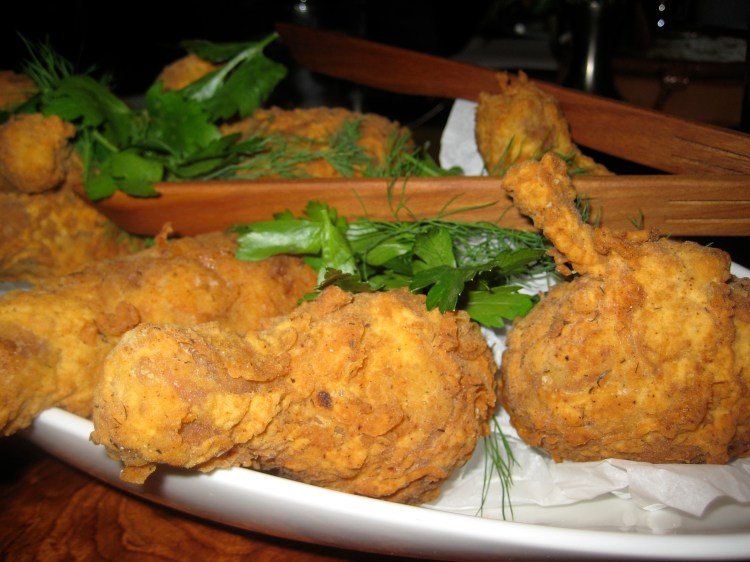
Fried chicken with a buttermilk crust & seasoned flour

Today we made a chicken stock, brussel sprouts with pancetta, a carrot orange soup (ethereal), buttermilk biscuits, fried chicken, chicken pot pie, apple tatin, & drank a nice pale ale to top it off (and the sous chef made a devil’s cake with chocolate ganache).  I’ll post some recipes for them later once I get my notes organized.   And it’s not 10:00 at night.  Tomorrow is my last day, but it’s been absolutely wonderful.

IMG_3772so I honestly felt this looked more deceiving than it tasted.  I’m a chocolate person normally, but this apple tatin did it for me, especially with the vanilla ice cream accompaniment.
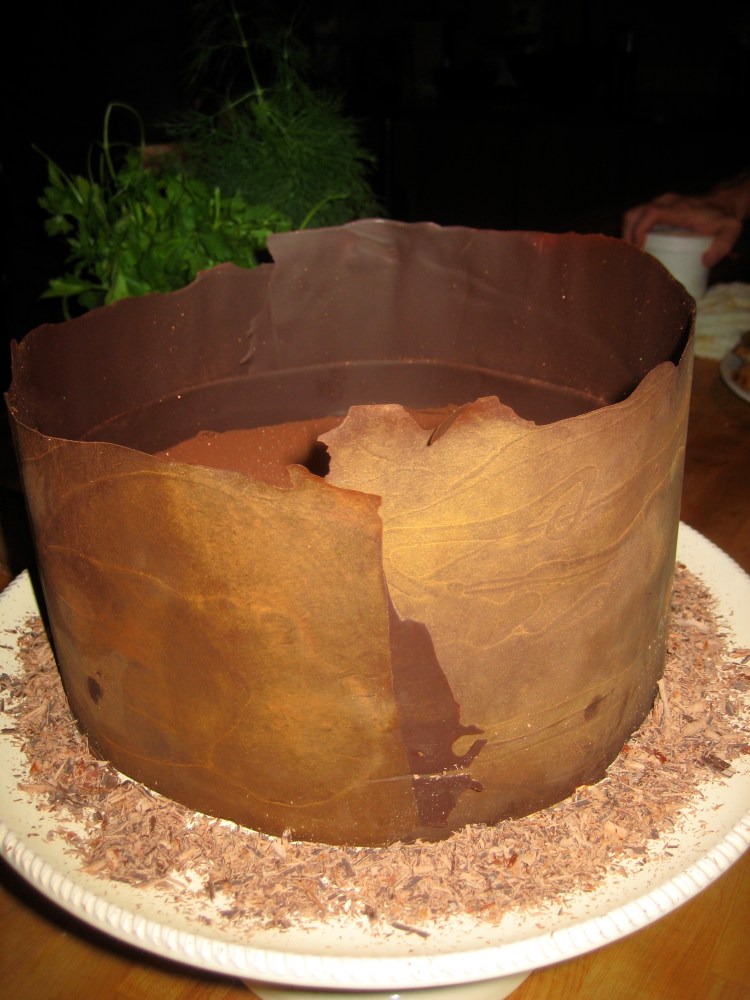
IMG_3768Devil’s chocolate cake with chocolate ganache


Not All in the Name: Part 1

Last month, Ben and I were able to attend a public lecture at Regent College in Vancouver, B.C..  I was browsing through the college’s website when I stumbled across a lecture entitled, ‘Food, Culture, & Formation of Christian Identity.’  I thought, “Oh, I totally want to go to this!”  So I immediately emailed our sitter to see if she was available and checked with Ben if he would want to go with me.

We’ve both been to a couple of these public lectures and they’re really fantastic.  You get to listen to a theologian or an expert in their field of study (but they weave it with theology) lecture for 50 minutes on their topic and then questions.  I have always gone away from these events a bit more enlightened on the way the world works.  This time it would be on food and what better way to glean about food than from a theologian who will most likely exposit a text, then apply it hermenuetically.  The lecturer was Dr. John Barclay.  If you google him, you’ll find that he studied under N.T. Wright (an Anglican bishop of Durham and one of the most influential theologians today of the New Testament), which is quite impressive and made me more excited to hear him speak.

So when he got to the platform and began to speak I was ready to take notes.  However, some of the first words out of his mouth were not what I expected in the slightest.  He said that although his lecture was entitled, ‘Food, Culture, & Formation of Christian Identity,’ his goal was to address global warming.  What!  What!!! Seriously, how can you title your lecture this and then talk about something so far fetching?  Well, I wasn’t about to get up and leave, since we did drive an hour with a border crossing just to get there.

What he said was he proposed to argue that due to our food consumption we could either help or make worse global warming.  However, I felt like it wasn’t solely on global warming, but also about how we as Christians consume in regards to food.  How do we lead the way when 20% of the world is taking 80% of resources from the world, especially considering we live in the 20%?  I will break this up into two posts, as to avoid being long winded.  There are lots of thoughts, so please add your input.   Ultimately, I believe this topic is about hospitality, because as you read on, you will see that it raises the question, “how do I care for my brother and sister with thanksgiving to God?”

His topic of outline went as the following:

  1. Setting the Scene
  2. Food does not matter — or does it?
  3. Food and the Challenge of Multiculturalism
  4. A Call for a contemporary Christian Food Taboo

He spoke of how many of the major religions have food taboos.  When you look at Judaism, you see many food taboos given to them, which made it hard for others to enter into their community.  Food taboos create boundaries of sorts in any of these religions; thus, it restricts who can come in and who cannot.  However, the one major religion which breaks away from these food taboos is Christianity.

In the first century church, there is an “abolition of food taboos as a symbol of social boundary-crossing.”  In Acts, Peter is told in a vision from the Lord that he is to eat unforbidden food.  Peter argues with the Lord, but Jesus continues on to tell him to eat of this food.  It was at this moment we can see that the food taboos put upon the Israelites were being reconstructed for the new church.

However, we see in I Corinthians  the dilemma of whether a brother or sister should eat (or serve) unclean meat if it makes their brother or sister stumble in their faith.  The apostle Paul at first makes it sound as if it does not matter if a brother or sister eats meat used as a sacrifice to an idol, because it was created by the Lord.  He cites Psalm 24, “The earth is the Lord’s, and everything in it…,” as a means to back up that this food was created by God, so it cannot be bad, even if it had been sacrificed to idols.

In spite of this, Paul speaks of the danger of eating any food in context of worship of daimonia, which is food under that of idols and gods, or moreover, the issue is not the food but context in consumption. It’s the orientation of food consumption, which means if it’s oriented to daimonia (food under that of idols & gods), than it’s blasphemous, because it’s not under Psalm 24.  And Psalm 24 is about thanksgiving to the Lord.  Key note here is that everything for the Christian is at stake in orientation, which is, “whether it’s directed in thanksgiving to God?”  This was one of the main points throughout the whole lecture, “what is the orientation?,” and “Can this action be given  in (Psalm 24) thanksgiving to God?”

Hence, why Paul raises the concern for the weaker brother or sister, because he knows their loyalty to Christ could be weakened by partaking in these daimonia meals.  Paul’s ultimate question is that of Christ’s found in the gospel, which is to care for their brother & sister.   Are there food substances we enjoy which inhibit or place a barrier between us and them?  This is why Paul says, “if food is the cause of my brother’s falling, I will never eat meat.”  He is willing to refrain from meat, in order to give thanksgiving to the Lord and care for his weaker brother or sister.

We then see the Lord’s Supper as the epitome of both of these principles: orientation to the Lord and concern for the weak (Note: Dr. Barclay would also call the weak, ‘the hungry’).  Christ invites all to come to his meal.  He invites all to commune with him and partake of the bread & the wine, in order to find true life.  Although the Lord’s supper is an open invitation for all, the wealthy Christians in Corinth were becoming drunk while the poor were left hungry.  This infuriates Paul, because they have defiled the very essence and spirit of the Lord’s Supper, which is inclusivity and made it about exclusivity. How than am I like the wealthy?  Am I making it easy for all to come, or am I leaving the hungry outside left to their own devices?